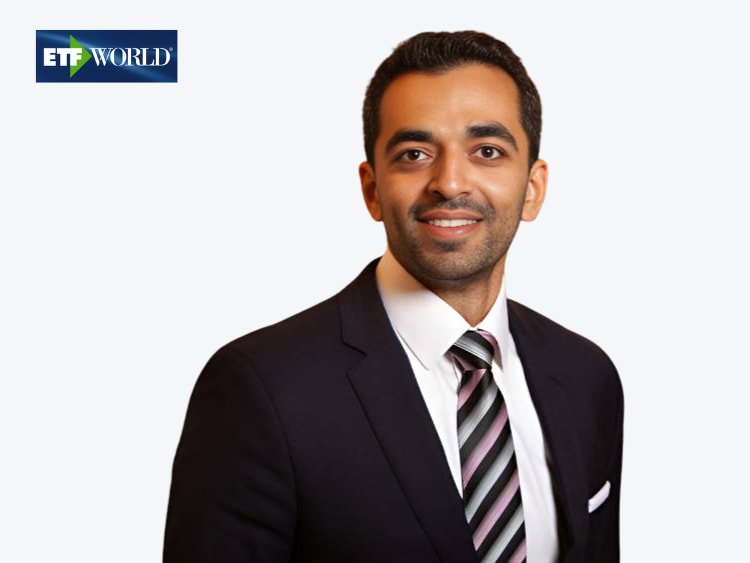

Five minutes with… Robert Arnott : Chairman, Founder of Research affiliates …
Invesco PowerShares ETF N. November 2009, N.5
Rob Arnott, the man who invented the RAFI indices, talks about the methodology and the secret of success for his fundamental indices.
How do the RAFI indices differ from traditional stock market indices?
With very few exceptions, the composition of most indices is based on the market capitalisation of the relevant stocks. Typically, the higher the stock market value of a share, the higher its index weighting. In the case of the RAFI indices, market capitalisation is a secondary factor. Instead, they use fundamental criteria to select stocks and determine their respective index weights.
In the past, the RAFI indices occasionally outperformed conventional stock market indices. Can you explain that?
We have severed the link between portfolio weights and over- or underweights. In cap-weighted indices, overvalued shares are systematically overweighted, while the weighting of undervalued shares is too low. At some point in time, the market will return to fair values. Then overvalued shares will tend to underperform, while undervalued shares will catch up. During this correction phase, traditional indices with their high weighting of overvalued shares will lag the RAFI indices – which assign relatively higher weights to undervalued shares and relatively lower weights to overvalued shares.
What caused the particularly strong lead of the RAFI indices in 2009?
The RAFI indices are reconstituted annually, the third Friday of March. In 2009, a particularly large number of undervalued shares were added to the RAFI indices. During the stock market rally that started soon after our index reweighting, these undervalued shares recorded disproportionate gains. But I would warn anyone from expecting this strong outperformance to continue endlessly into the future.
Will the RAFI indices drop back soon?
Model calculations for the past 40 years show that fundamental indices tend to outperform cap-weighted indices in about three out of any four periods. However, traditional indices will be difficult to beat during periods when growth stocks are in favour.
What are the key criteria on which the composition of the RAFI indices is based?
We use four straightforward and comprehensible measures of size: cash flow, sales, book value and dividends. All other key financials can be subsumed under these four ratios. However, our primary aim when defining these criteria was not to identify those criteria that had yielded the highest returns in the past, but to determine companies’ economic significance.
So the RAFI indices could be improved further?
We do have more ideas. But the critical success factor lies in the fact that the RAFI indices add value because positions in overvalued shares are systematically reduced through regular reweightings. We do not need any hidden key ratios to achieve that.
Important information: This marketing document is directed at Professional Clients in Continental Europe only and is not for consumer use.
Where Invesco PowerShares has expressed views and opinions, these may change without notice. The price of ETFs and any income will fluctuate, this may partly be the result of exchange rate fluctuations, and investors may not get back the full amount invested. Past performance is not an indication of future performance, provides no guarantee for the future and is not constant over time. Whilst an ETF will seek to track an Index, Invesco PowerShares does not guarantee that this will occur. When making an investment in an ETF you are buying shares in a company that is listed on a stock exchange. The price of the shares will be determined by supply and demand. It is expected that shares in the ETFs will trade closely to their NAV, and because of the exchange-traded fund structure, it is expected that a significant discount or premium of price to asset value will not be sustainable over the long term. However, supply and demand in the shares on the relevant exchange together with any disruptions to creations and redemptions of units in the underlying fund may result in share prices that differ significantly from the NAVs and there can be no certainty that there will be liquidity in the shares on any exchange. Only Authorised Participants, as defined in the Full Prospectus of the ETF, can request the Manager to create and redeem units in the underlying fund. Any investment in an ETF should be made on the basis of the relevant Full Prospectus, Simplified Prospectus and Supplement, including consideration of the investment objective, risks, charges and expenses. Further information on the ETFs, including the Full Prospectus, Simplified Prospectuses and Supplements is available at www.invescopowershares.net, from your adviser or broker. This document is intended for information purposes in regard to the existence and potential benefits of investing in ETFs. However, it is not intended to provide specific investment advice including, without limitation, investment, financial, legal, accounting or tax advice, or to make any recommendations about the suitability of the ETF for the circumstances of any particular investor. You should take appropriate advice as to any securities, taxation or other legislation affecting you prior to investment.
Restricted investors: The ETF’s shares are neither registered for public distribution, nor listed on any exchange, in jurisdictions in Continental Europe other than in France, Germany and Italy, as well as Switzerland (PowerShares EQQQ Fund and PowerShares Global Agriculture NASDAQ OMX Fund only). As a consequence, these ETFs’ shares may not be offered or distributed by way of public advertisement or public offer in any jurisdictions in Continental Europe other than France, Germany and Italy, as well as Switzerland (PowerShares EQQQ Fund and PowerShares Global Agriculture NASDAQ OMX Fund only). The ETFs’ shares may only be offered and the Full Prospectus, Simplified Prospectuses, and marketing materials on the ETFs may only be distributed in jurisdictions in Continental Europe, other than France, Germany and Italy, as well as Switzerland (PowerShares EQQQ Fund and PowerShares Global Agriculture NASDAQ OMX Fund only), without public solicitation and in compliance with the private placement rules set forth in the laws, rules and regulations of the jurisdictions concerned. Any resale of the ETFs in these countries may only be made in accordance with the relevant applicable laws governing the sale and offering of financial products. The distribution and the offering of ETFs in certain jurisdictions may be restricted by law. Persons into whose possession this document may come are required to inform themselves about and to comply with any relevant restrictions. This does not constitute an offer or solicitation by anyone in any jurisdiction in which such an offer is not authorised or to any person to who it is unlawful to make such an offer or solicitation. Persons interested in acquiring ETFs should inform themselves as to (i) the legal requirements in the countries of their nationality, residence, ordinary residence or domicile: (ii) any foreign exchange controls: and (iii) tax consequences which might be relevant. French Professional Clients should note that all the Invesco PowerShares ETFs mentioned in this document are not all registered and listed in France, this does not constitute an offer to them, and a list of all the Invesco PowerShares ETFs registered and listed in France, is available at www.invescopowershares.net or from your contact at Invesco Asset Management S.A.
Important information: This marketing document is directed at Professional Clients in Continental Europe only and is not for consumer use.
France, Germany, and Italy: This document is issued in France by Invesco Asset Management S.A., 18, rue de Londres, 75009 Paris. This document is issued in Germany by Invesco Asset Management Deutschland GmbH, An der Welle 5, 60322 -Frankfurt/M., regulated by Bundesanstalt für Finanzdienstleistungsaufsicht. This document is issued in Italy by Invesco Asset Management SA Sede Secondaria, Via Cordusio 2, 20123 Milano.
Austria: This document is issued in Austria by Invesco Asset Management Österreich GmbH.Switzerland: This document is issued in Switzerland by Invesco Asset Management (Schweiz) AG, who acts as representative for PowerShares EQQQ Fund and PowerShares Global Agriculture NASDAQ OMX Fund (registered for sale in Switzerland). Paying agent for the ETFs registered for sale in Switzerland: BNP Paribas Securities Services S.A., Paris, Zurich Branch, Selnaustrasse 16, CH-8022 Zurich.
PowerShares has been licensed by FTSE International Limited to use the name [«FTSE Research Affiliates Index]» «All copyright in the index values and constituent list vests in FTSE International Limited. PowerShares has obtained full licence from FTSE International Limited to use such copyright in the creation of this product
«FTSE®» is trade mark of the London Stock Exchange Plc and The Financial Times Limited and is used by FTSE International Limited under licence. «Research Affiliates» and «Fundamental Index» are trade marks of Research Affiliates.
The FTSE RAFI Italy 30 Index, the FTSE RAFI Europe Index, the FTSE RAFI Developed Europe Mid-Small Index, the FTSE RAFI US 1000 Index and the FTSE RAFI Developed 1000 Index are calculated by FTSE International Limited in conjunction with Research Affiliates LLC. FTSE International Limited or Research Affiliates LLC do not sponsor, endorse or promote these products.
The shares in the PowerShares FTSE RAFI Italy 30, PowerShares FTSE RAFI Europe, PowerShares FTSE RAFI Developed Europe Mid-Small, PowerShares FTSE RAFI US 1000 and PowerShares FTSE RAFI Developed 1000 Funds are not in any way sponsored, endorsed, sold or promoted by FTSE International Limited («FTSE») or by the London Stock Exchange Plc (the «Exchange») or by The Financial Times Limited («FT») or by Research Affiliates LLC («RA») and neither FTSE nor Exchange nor FT nor RA makes any warranty or representation whatsoever, expressly or impliedly, either as to the results to be obtained from the use of the FTSE RAFI Italy 30 Index, the FTSE RAFI Europe Index, the FTSE RAFI Developed Europe Mid-Small Index, the FTSE RAFI US 1000 Index and the FTSE RAFI Developed 1000 Index («Indices») and/or the figure at which the said Indices stand at any particular time on any particular day or otherwise. However, neither FTSE nor Exchange nor FT nor RA shall be liable (whether in negligence or otherwise) to any person for any error in the Indices and neither FTSE nor the Exchange nor FT nor RA shall be under any obligation to advise any person of any error therein.
Source: ETFWorld – PowerShares